Repair X · Wine Cooler Repair
Wine cooler & specialty appliance repair
Wine cooler not holding temperature? Ice maker down? We repair wine coolers, ice makers, and specialty appliances with certified precision.
Wine cooler not holding temperature? Ice maker down? We repair wine coolers, ice makers, and specialty appliances with certified precision.
Wine is more sensitive to temperature swings than to any single reading. A cabinet that drifts between 50 and 62 degrees every day pushes the liquid in and out of the cork, and that movement lets oxygen in. A cooler that holds 57 degrees steadily is kinder to a collection than one that reaches the same average by bouncing around it all week.
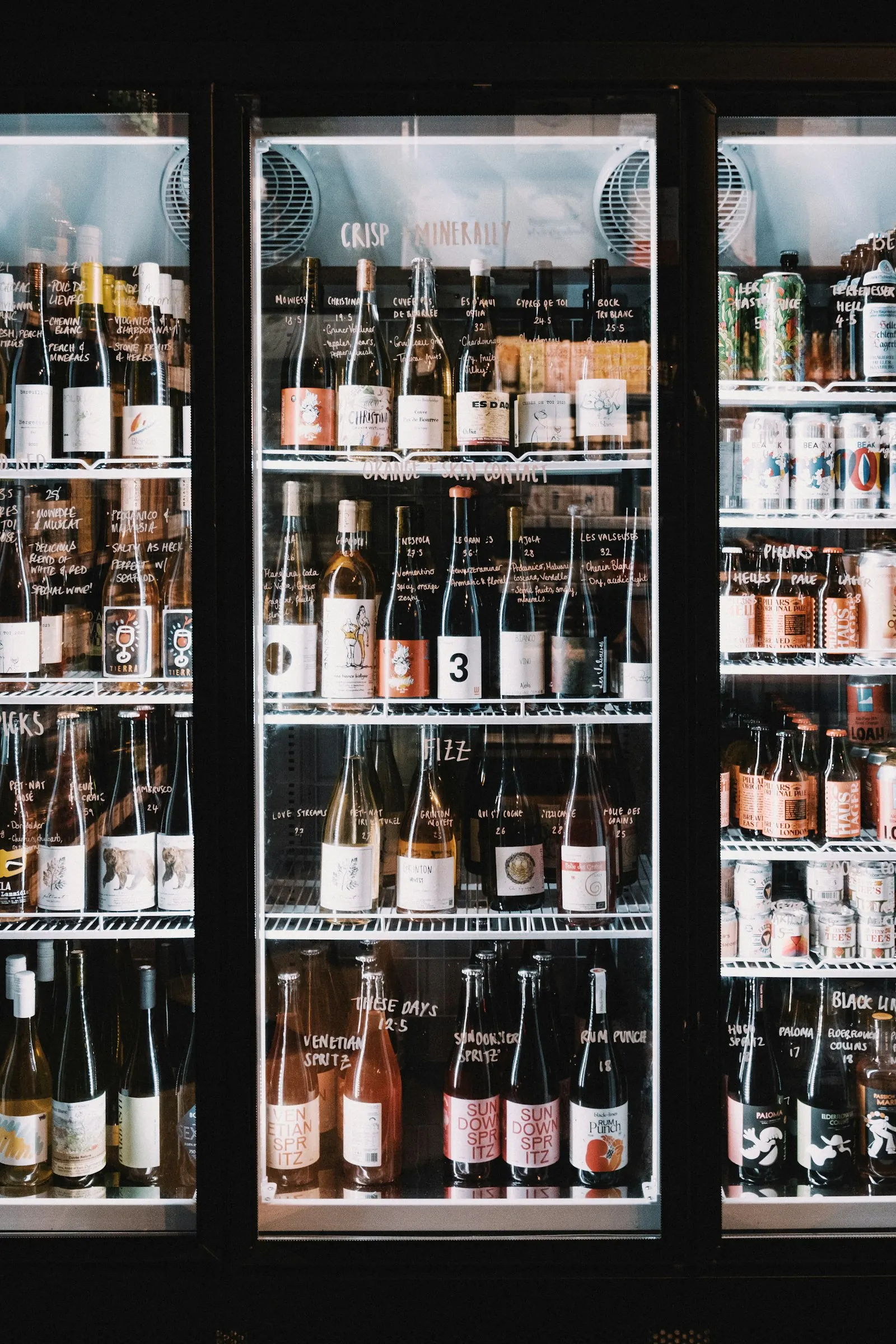
The other variables matter too. Light degrades wine, which is why glass door units belong out of direct sun. Vibration keeps sediment suspended and stresses the bottle over years. Low humidity dries corks from the outside and lets air past them. High humidity grows mold on labels. A wine cooler is doing more than refrigerating, so a fault that would be minor in a kitchen refrigerator matters here.
Built-in and under-counter wine coolers shed heat through a condenser that often sits at the front or along one side, with very little clearance to work with. When that condenser is blocked by cabinetry, dust, or a panel installed over the grille, the compressor runs longer and the cabinet drifts warm. Checking clearance and cleaning the condenser is the first step on almost every not-cooling call.
When airflow is clear and the cabinet still will not hold temperature, the fault is usually the compressor start components, a fan that has stopped, or a refrigerant leak at the evaporator. A compressor that hums and trips its overload, or a unit that cools for an hour and then warms, points to sealed system work, which has to be quoted separately once the diagnosis is complete.
Water on the glass, water pooling in the bottom of the cabinet, or fog between the panes of a dual-pane door all come back to humidity and the seal. A gasket that has hardened or lost its shape lets warm, moist room air in, and that moisture condenses on the coldest surface it can find. Testing a gasket is simple: close the door on a strip of paper and pull. If it slides out freely, the seal is not doing its job.
A dual-pane glass door that has fogged between the panes has lost its seal and cannot be dried out. That means a door replacement, and we will tell you when that is the case instead of selling a visit that cannot fix the problem. Hinges and alignment matter on these units as well, because a door that does not sit square will not seal no matter how good the gasket is.
A wine cooler should be quiet. A rattle that started when bottles were rearranged is usually a bottle touching the shelf above it or resting against the rear wall where the evaporator fan sits. Moving the bottle often ends the noise. A fan that hums on its own, though, has a bearing on its way out, and the faint cyclical sound it makes at night is the early warning.
Compressors in these units are small and mounted on isolators. When the isolators harden or the unit is shimmed off level, compressor vibration transfers into the cabinet and the floor, and every bottle in the unit amplifies it. Leveling the unit and checking the isolators is worth doing before assuming the compressor has failed, because an actual compressor failure sounds different and comes with a temperature fault.
A beverage center holding cans near 38 degrees runs its compressor harder than a wine cooler set to 55, in a smaller cabinet with less insulation. That makes airflow and door discipline more important rather than less. A glass door opened every hour lets a large volume of warm room air in, and the unit spends the rest of the day catching up to setpoint.
Access is the other half of the job on built-in units. Panels, toe kicks, and surrounding cabinetry have to come off before a fan or a compressor can be reached, and a unit built in tight can take longer to service than a freestanding appliance with the same fault. If your cabinetry has a panel over the grille or a tight side clearance, tell us when you call so we arrive prepared for it.
The appliance diagnostic is $145, and it is credited in full toward the repair when you approve it with any repair you approve. We check airflow and clearances, test the fans, the thermistor and the start components under power, and check the sealed system where the symptoms point that way. You get the fault, the part, and the price before any work begins. High-end brand and cooling-system repairs cost substantially more than that: sealed-system, refrigerant and built-in work takes longer and uses specialised parts. Those repairs are quoted after the diagnostic and before any work starts.
Sealed system and refrigerant work, built-in or panel-ready appliances, and multi-fault jobs are quoted separately after the diagnosis. Every completed repair carries a 90-day warranty. We service wine coolers, beverage centers, and under-counter units from brands including Sub-Zero, Miele, Thermador, Bosch, KitchenAid, Whirlpool, GE, LG and Samsung. Call (858) 267-9438 with the model number and the temperature the cabinet is holding.
Straight answers about common appliance problems and our repair process.
Common causes include a failed compressor, faulty thermostat, or a refrigerant leak. We repair thermoelectric and compressor units.
Excess humidity can come from a worn door seal or a failed drain. We fix the root cause.
Noise often comes from a failing condenser fan or compressor. We diagnose and repair it.
$145, credited in full toward the repair when you approve it with any repair you approve. Upfront, transparent pricing.
Have a different question? Contact us or call (858) 267-9438.
See what each appliance repair costs, problem by problem — and the parts that usually turn out to be responsible.
We focus on the neighborhoods close to our Lemon Grove base. Call or book online for a fast appointment.
Call (858) 267-9438