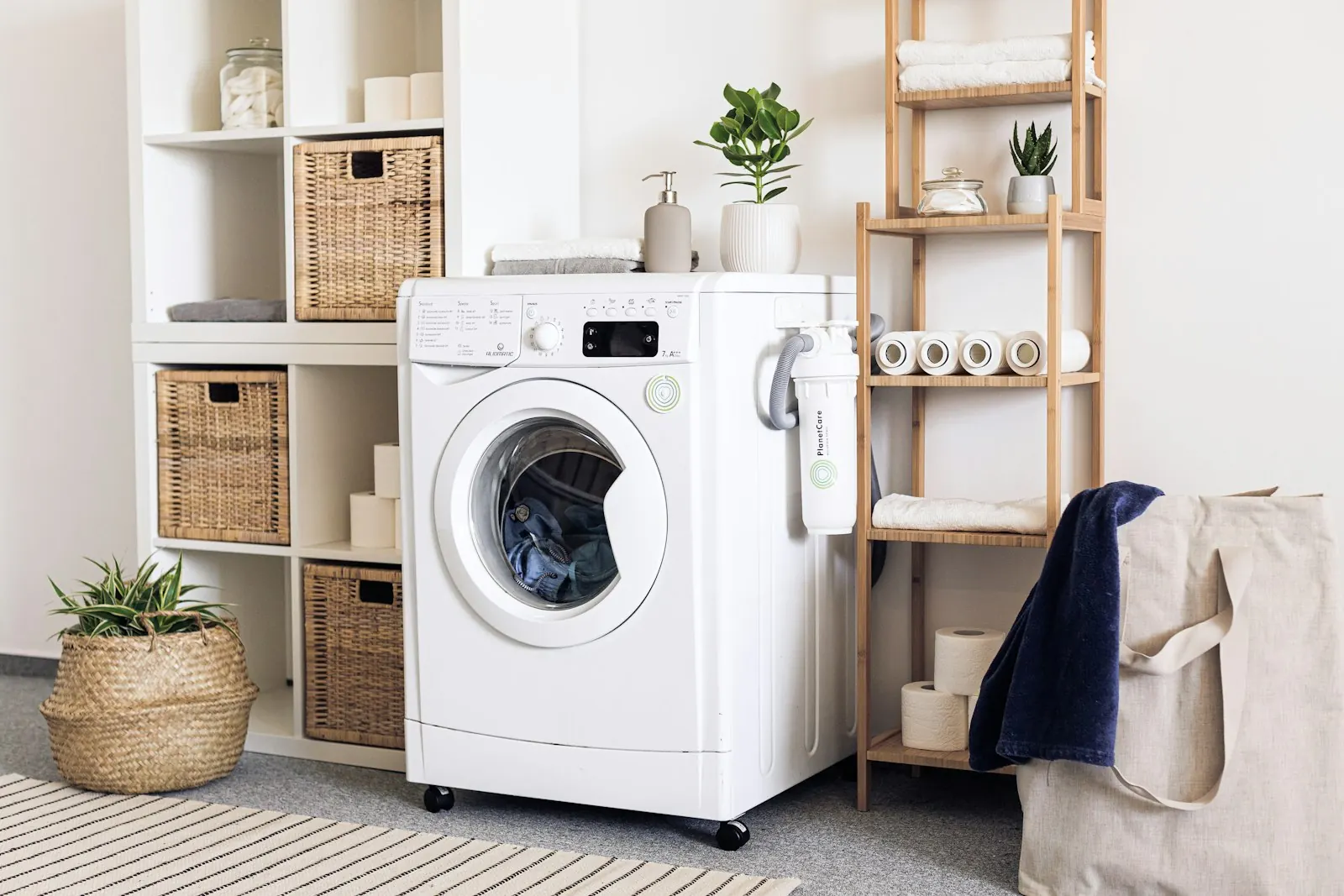
Repair X · Washer & Dryer Repair
Washer & dryer repair across San Diego
Leaking washer, noisy spin, dryer not heating? We repair every major brand quickly, with upfront pricing and a 90-day warranty.
Leaking washer, noisy spin, dryer not heating? We repair every major brand quickly, with upfront pricing and a 90-day warranty.
Washers and dryers are sold as a pair and repaired as two separate machines. A washer is a water appliance: fill valve, tub, drain pump, door lock or lid switch, drive system and control. A dryer is a heat and air appliance: element or gas burner, thermal fuse and limits, blower wheel, drum belt and rollers, and the vent that carries the moisture out of the house.
That difference matters because the symptoms overlap while the causes do not. A washer that will not drain and a dryer that will not heat have nothing in common mechanically, and treating them as one category is how a simple repair turns into a parts swap.
Washer FaultsNot draining or water left in the drum. Drain pump, clogged pump filter on front-loaders, a kinked or improperly positioned drain hose, or debris in the tub-to-pump hose. We check the drain path before the pump, because a restriction produces the same symptom as a failed pump.
Not spinning or not completing the cycle. Lid switch on top-loaders, door lock assembly on front-loaders, a failed drive belt, a worn motor coupler, or a control that never receives the signal that the lid is closed.
Leaking. The door boot seal on a front-loader is the most common source. On top-loaders, look at the inlet hose washers, the drain hose and its standpipe height, and the tub seal. Oversudsing from too much detergent looks exactly like a leak and costs nothing to fix.
Loud banging or walking. Worn drum bearings, a cracked spider arm on a front-loader, shipping bolts left in place, or a load that is simply out of balance. Bearing noise that has been present for months usually means the drum assembly, not a cheap part.
Filling too slowly or not at all. Clogged inlet screens at the valve, a failing inlet valve, or low household water pressure. This is worth checking before anything is replaced.
Dryer FaultsRuns but produces no heat. On electric dryers this is usually the heating element, a blown thermal fuse, or an opened thermal cut-off. On gas dryers it is most often the igniter or the coils on the gas valve, which open when hot and then fail to open again on the next cycle. The order of testing matters: the thermal fuse is a safety device that fails because something else overheated, so replacing it alone and walking away invites a repeat visit.
Takes two or three cycles to dry. Almost always airflow, not heat. A lint-clogged vent, a crushed or overlong duct, a blocked exterior hood, or a blower wheel packed with lint. This is the single most common dryer complaint with a non-mechanical cause, and it is also a fire risk.
Drum not turning. Broken drive belt, worn drum rollers, or a failed idler pulley. A belt alone is an inexpensive part; a seized roller that shredded the belt is not, which is why the drum is turned by hand on the diagnosis.
Stopping mid-cycle or not starting. Door switch, control board, or a timer on older models. On some models a moisture sensor that has been coated with fabric softener residue causes cycles that end early or run long.
InstallationBoth machines depend on parts of the house that are not part of the appliance. A dryer needs a short, straight, lint-free path to the outside. A washer needs a drain hose that rises to a proper standpipe height and is not pushed too far down the pipe. When our diagnosis shows the appliance is healthy, we say so, and we tell you what to change.
Repair or ReplacePumps, seals, belts, elements, thermal fuses, lid switches and door locks are all worth doing on a machine that is otherwise sound. Drum bearing and spider arm failures on a front-loader are the expensive ones, and on a machine past its expected service life the honest answer is sometimes that the repair costs more than the correction is worth. We will tell you which one you are looking at, with the part price, before any work starts.
The VisitThe appliance diagnostic is $95, and it is credited in full toward the repair when you approve it with any repair you approve. Most completed appliance repairs land between $145 and $295 depending on the part required. Sealed-system work, built-in or panel-ready access, and multi-fault jobs are quoted separately after the diagnosis. Every completed repair carries a 90-day warranty.
We repair LG, Samsung, Whirlpool, GE, KitchenAid, Bosch, Frigidaire, Maytag, Speed Queen, Miele and more, on both top-load and front-load machines.
High-end brand and cooling-system diagnostics are $145, also credited in full toward the repair when you approve it with any repair you approve.
Straight answers about common appliance problems and our repair process.
Common causes include a broken drive belt, a faulty lid switch, a failed motor, or a worn clutch. We diagnose and fix it on the first visit.
A failed heating element, thermal fuse, thermostat, or gas valve often causes this. We'll identify the fault and repair it safely.
Leaks typically come from a worn door boot, a damaged pump, or loose hoses. We find the source and fix it.
$95, credited in full toward the repair when you approve it with any repair you approve. Upfront, transparent pricing.
Have a different question? Contact us or call (858) 267-9438.
Related guide: Washer not draining
See what each appliance repair costs, problem by problem — and the parts that usually turn out to be responsible.
We focus on the neighborhoods close to our Lemon Grove base. Call or book online for a fast appointment.
Call (858) 267-9438